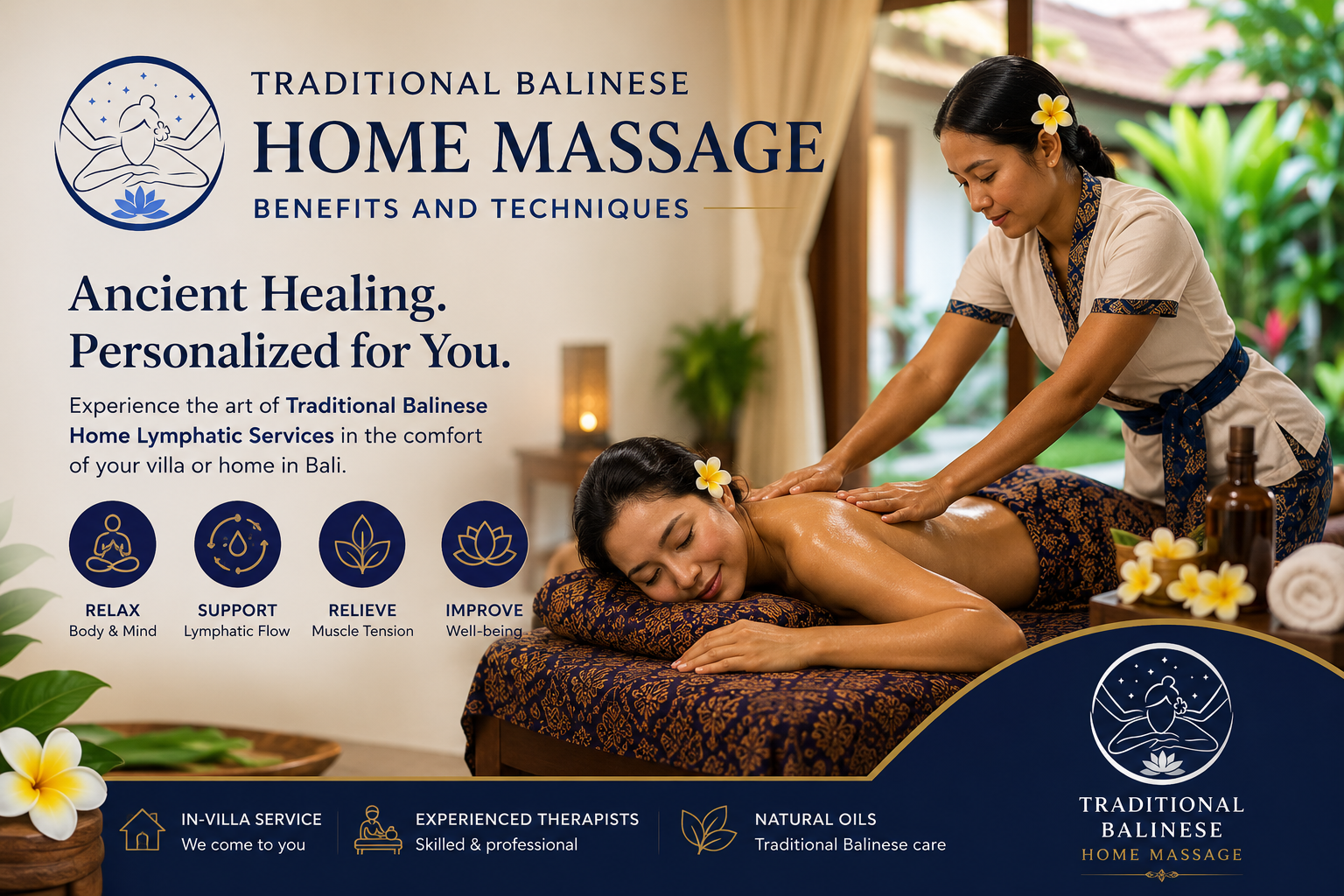
Traditional Balinese Home Massage Services can be especially helpful when your body feels heavy after a long flight, your shoulders are tight from carrying luggage, your legs feel tired after exploring Bali, or you simply want professional bodywork without spending another hour travelling to a spa. The biggest practical advantage is simple: the treatment comes to your villa, hotel, or home, allowing you to relax before and after the session.
Why Home Massage Lymphatic Bali Can Be a Better Choice in Bali
For many visitors, the problem is not finding a massage in Bali. Massage services are everywhere. The real challenge is choosing a treatment that matches what your body needs and finding a therapist who understands the difference between relaxation massage, traditional Balinese massage, and gentle lymphatic work.
Traditional Balinese Home Lymphatic Services offer a convenient approach for people who want the comfort of a private setting while still enjoying structured professional treatment. Instead of rushing through traffic after a massage, you can remain in your villa and continue resting.
This matters even more after a full day of sightseeing, surfing, hiking, shopping, or travelling between destinations. Your body has already been working. Adding another trip across Bali simply to reach a spa may not be the relaxing experience you expected.
A professional home session also gives the therapist an opportunity to focus on your actual needs. Some guests need firm work around the shoulders and back. Others prefer gentle movements because they feel tired, puffy, or physically sensitive after travelling.
That is where Balinese home massage becomes more than a convenient alternative to a spa. When the treatment is properly adapted, the experience can feel much more personal.
What Makes Traditional Balinese Massage Different?
Traditional Balinese massage is not simply a stronger version of a Western relaxation massage. The technique commonly combines flowing strokes, kneading, pressure using the palms and thumbs, acupressure, gentle stretching, and aromatic oils. Indonesian vocational education sources also distinguish Balinese massage from Javanese massage by its technique, purpose, and use of aromatherapy oils.
In practical terms, a good session should feel like a sequence rather than a collection of random massage movements.
The therapist may begin with broad strokes to warm the body. Pressure can then become more focused around areas such as the shoulders, lower back, hips, calves, or feet. Gentle stretching may be introduced where appropriate, followed by slower movements to finish the session.
This combination is one reason traditional Balinese massage remains popular with both residents and visitors.
However, there is an important distinction when the service includes lymphatic techniques. Traditional massage and manual lymphatic drainage are not the same thing.
Manual lymphatic drainage uses very gentle, specific movements designed to encourage lymph fluid movement. The National Cancer Institute describes manual lymphatic drainage as gentle massage that helps move lymph fluid through the body, particularly as part of professional lymphedema management.
Therefore, Traditional Balinese Home Lymphatic Services should not mean simply applying strong pressure and calling it lymphatic massage.
A knowledgeable practitioner understands when to use flowing Balinese techniques and when lymphatic work requires a much lighter approach.
Traditional Balinese Home Lymphatic Services: What Happens During a Session?
The experience usually begins before the actual massage.
A professional therapist should ask about your preferred pressure, areas of discomfort, recent physical activity, and any relevant health concerns. This short conversation can make a significant difference because there is no universal pressure level that works for everyone.
For Traditional Balinese Home Lymphatic Services, the therapist should also understand that lymphatic techniques are generally gentle. Cleveland Clinic explains that lymphatic drainage massage uses light, strategic movements to encourage excess fluid toward functioning lymph vessels and lymph nodes.
1. Preparing the Room
A home massage does not require a large room.
A clean, comfortable area with enough space for a professional massage table is usually sufficient. The therapist should bring the necessary equipment, clean linens, towels, and massage products when these are included in the service.
One practical advantage of home lymphatic massage Bali is that you can prepare the room exactly as you like. You can reduce noise, adjust the temperature, dim the lights, and remove distractions.
2. Understanding Your Body Before Massage
The therapist should ask where you feel tension and what kind of experience you want.
For example, a traveller who spent six hours walking around Ubud may want attention on the feet and legs. Someone who worked remotely from a villa may need more attention around the neck, shoulders, and upper back.
This consultation helps prevent a common mistake in massage services: following exactly the same routine for every client.
Traditional Balinese Home Lymphatic Services should be adapted according to the purpose of the appointment.
3. Flowing Balinese Massage Techniques
Traditional Balinese techniques may include long strokes, kneading, acupressure, skin rolling, and gentle stretching.
Long strokes help create a continuous rhythm. Kneading can focus on muscular areas that feel tight. Thumb or palm pressure can be used more precisely, while gentle stretching can support comfortable movement.
The exact sequence varies between practitioners, which is normal. The quality of the treatment depends less on following a rigid script and more on the therapist’s ability to adjust pressure, pace, and technique.
4. Gentle Lymphatic Techniques
Lymphatic work is different.
The pressure is typically much lighter than traditional deep massage because lymphatic vessels are located relatively close to the surface of the skin. Cleveland Clinic specifically advises using a very light touch for lymphatic self massage rather than pressing deeply into muscle tissue.
This is an important point for anyone comparing Traditional Balinese Home Lymphatic Services.
If someone expects lymphatic massage to feel like deep tissue massage, they may incorrectly assume that stronger pressure means better results. It does not.
A professional approach focuses on controlled, gentle movements rather than trying to force fluid through the body.
Key Benefits of Traditional Balinese Home Lymphatic Services
The benefits depend on the individual, the technique used, and the reason for booking the treatment.
Relaxation After Travel
Long flights, airport transfers, unfamiliar beds, and busy itineraries can leave the body feeling exhausted.
Traditional Balinese Home Lymphatic Services can provide a convenient opportunity to slow down without adding another journey to your schedule.
You can finish your session and remain in your accommodation rather than immediately returning to traffic.
Relief From Everyday Muscle Tension
Traditional Balinese massage can be useful when everyday activities create muscular tension.
Common examples include long periods sitting at a laptop, carrying luggage, walking extensively, riding a scooter, or spending hours in an airplane.
A therapist can adjust the session around these areas rather than treating the entire body with identical pressure.
A More Comfortable Post Travel Experience
Some travellers experience a temporary feeling of heaviness or puffiness after prolonged sitting.
Gentle movement and appropriate massage may feel comfortable for some people, but persistent swelling should not automatically be treated as a massage problem.
Cleveland Clinic notes that lymphatic drainage massage can be used for swelling associated with lymphedema and certain medical conditions, but it is not appropriate for everyone.
That distinction is essential for responsible Traditional Balinese Home Lymphatic Services.
Convenience and Privacy
The practical benefit of home massage Bali is often underestimated.
There is no waiting room, no additional transportation, and no need to organise your schedule around a spa appointment across town.
For couples, families, honeymoon travellers, or guests staying in private villas, this can make the overall wellness experience much easier.
A More Personal Treatment
A home setting can also encourage clearer communication.
You can tell your therapist that your shoulders need more attention, your legs feel sensitive, or you prefer lighter pressure.
The objective is not to tolerate discomfort. The objective is to receive an appropriate treatment.
Traditional Balinese Home Lymphatic Services Versus Traditional Massage
These treatments can complement each other, but they should not be treated as identical.
Traditional Balinese massage generally offers a broader full body experience with flowing movements, pressure, kneading, stretching, and aromatherapy.
Lymphatic drainage is much more specific in its technique and pressure.
For people seeking relaxation and muscular comfort, a traditional Balinese session may be the better fit.
For someone dealing with diagnosed lymphedema or medically significant swelling, massage should be approached differently. The National Cancer Institute explains that complete decongestive therapy for lymphedema can include manual lymphatic drainage, compression, exercise, and skin care under professional guidance.
This means Traditional Balinese Home Lymphatic Services should never be marketed as a replacement for medical care.
If swelling is persistent, painful, sudden, or associated with a medical condition, consult a qualified healthcare professional before booking a lymphatic treatment.
Who Can Benefit From a Home Session?
Traditional Balinese Home Lymphatic Services may appeal to several types of visitors.
Travellers After a Long Flight
Sitting for hours can leave you feeling stiff and uncomfortable. A gentle wellness session at your accommodation can be an easy way to transition into holiday mode.
Guests With Busy Bali Itineraries
If your day includes temples, beaches, restaurants, shopping, and sightseeing, your body may appreciate a quieter evening.
Booking Balinese massage at home means the recovery part of your day does not require additional travel.
Remote Workers
Laptop work often creates tension around the neck, shoulders, upper back, and wrists.
A therapist can focus on these areas while keeping the session relaxing rather than excessively intense.
Couples and Families
A private setting can make scheduling easier, particularly when several people want treatments during the same stay.
Traditional Balinese Home Lymphatic Services can be arranged as part of a wider wellness experience, depending on the provider’s treatment options and therapist availability.
A Practical Experience: What Good Massage Feels Like
One of the clearest differences between an average session and a professional one is communication.
A good therapist does not simply start applying pressure and continue for the entire appointment without checking your comfort.
Instead, the therapist observes your response.
If your shoulders are extremely tense, the therapist may slow down before increasing pressure. If your muscles become sensitive, the technique can be adjusted. If you prefer a relaxing session, there is no reason to turn it into an endurance test.
This is particularly important with Traditional Balinese Home Lymphatic Services because lymphatic work requires a different touch from deep tissue techniques.
The goal should always be appropriate treatment rather than maximum pressure.
Practitioner Tips for Getting Better Results
Tell Your Therapist What You Actually Need
Do not simply say, “medium pressure” and leave it there.
Explain what you have been doing that day.
For example, tell the therapist if you spent the day surfing, walking, working on a laptop, riding a scooter, or travelling.
This information helps the practitioner understand why particular areas may feel tight.
Do Not Wait Until the Massage Is Over
If the pressure is uncomfortable, say so immediately.
If you want more attention around your shoulders, mention it.
Professional massage should be collaborative. Communication is part of the treatment.
Hydrate Normally
After a massage, continue drinking fluids according to your normal needs.
Cleveland Clinic also recommends staying hydrated after lymphatic self massage and notes that some people can experience temporary fatigue, headache, or nausea.
Avoid Treating Medical Symptoms as Simple Spa Problems
This is one of the most important recommendations for anyone considering Traditional Balinese Home Lymphatic Services.
Massage is not a diagnostic service.
Cleveland Clinic advises avoiding lymphatic drainage massage in situations including blood clots, deep vein thrombosis, infection, fever, certain heart conditions, kidney failure, and stroke.
If you have a medical condition, recent surgery, unexplained swelling, or another concern, ask your healthcare provider whether massage is appropriate.
How to Choose Traditional Balinese Home Lymphatic Services in Bali
Not every massage provider offers the same standard.
Before booking, consider five practical factors.
Check the Treatment Description
The provider should clearly explain whether you are booking traditional Balinese massage, lymphatic drainage, or a combination.
Vague descriptions make it difficult to know what you are actually purchasing.
Ask About Therapist Experience
Ask whether the therapist has specific training in lymphatic techniques if that is the main reason for your booking.
A therapist experienced in traditional massage is not automatically trained in clinical lymphatic care.
Confirm What Comes to Your Accommodation
A professional home service should explain whether the therapist brings the massage table, linens, towels, and oils.
This removes uncertainty before the appointment.
Confirm the Service Area
Bali is large, and travel time can vary considerably between areas.
Ask whether the provider covers your villa or hotel location and whether there are additional travel charges.
Read Reviews Carefully
Do not only look at the star rating.
Read comments about therapist professionalism, punctuality, cleanliness, communication, pressure control, and the actual quality of the massage.
These details are often more useful than a simple rating.
Traditional Balinese Home Lymphatic Services for a Villa Wellness Day
A home massage can also become part of a larger wellness routine.
For example, you could begin the morning with light activity, spend the afternoon relaxing at your villa, and schedule a massage later in the day.
Couples can book treatments around dinner plans. Families can arrange sessions around their children’s schedules. Remote workers can finish their workday and transition directly into relaxation.
The advantage of private massage Bali is that the experience can be built around your schedule instead of the schedule of a spa.
Traditional Balinese Home Lymphatic Services can therefore be especially attractive to travellers who value privacy, convenience, and personalised attention.
Frequently Asked Questions About Traditional Balinese Home Lymphatic Services
Is Traditional Balinese Massage the Same as Lymphatic Drainage Massage?
No.
Traditional Balinese massage commonly combines flowing strokes, kneading, acupressure, stretching, and aromatic oils. Lymphatic drainage uses much lighter and more specific movements designed to encourage lymph fluid movement.
Traditional Balinese Home Lymphatic Services should clearly distinguish between these techniques rather than treating them as interchangeable.
Is Lymphatic Massage Supposed to Be Deep?
No.
Lymphatic drainage generally uses gentle pressure. Cleveland Clinic explains that lymphatic vessels are superficial and that excessive pressure is not the objective of lymphatic self massage.
If you want strong muscular pressure, a traditional or therapeutic massage may be more appropriate.
How Long Does a Traditional Balinese Home Massage Take?
Many traditional Balinese massage sessions are offered in durations such as 60, 90, or 120 minutes, depending on the provider.
A 60 minute session can work well for focused relaxation. A longer session provides more time for a full body treatment and additional attention to areas that need it.
Can I Book Traditional Balinese Home Lymphatic Services at My Villa?
Yes, many home massage providers in Bali operate directly at villas, hotels, and private residences.
The practical advantage is that you do not need to travel after the treatment. You can simply continue resting in your accommodation.
Is Traditional Balinese Massage Good After a Long Flight?
Many travellers choose massage after travelling because sitting for long periods can leave the body feeling stiff and tired.
However, massage is not appropriate for every type of swelling or medical condition. If you have unusual or persistent swelling, especially with pain or other symptoms, seek medical advice first.
What Should I Tell the Therapist Before the Massage?
Tell the therapist about your preferred pressure, areas of tension, recent physical activity, injuries, pregnancy if applicable, recent procedures, and any health concerns that may affect massage suitability.
Clear information allows the therapist to make better decisions about pressure and technique.
How Is Home Massage Different From Going to a Spa?
The main difference is convenience and privacy.
With massage service Bali, you travel to the treatment location. With a home service, the therapist travels to you.
For visitors staying in villas or hotels, the difference can be significant because you can rest immediately after the treatment without arranging another journey.
Why Traditional Balinese Home Lymphatic Services Can Be a Smart Bali Wellness Choice
The appeal of Traditional Balinese Home Lymphatic Services is not simply that the therapist comes to your door.
The real value comes from combining the comfort of a private setting with appropriate massage techniques.
Traditional Balinese massage can provide a flowing full body experience designed around relaxation and muscular comfort. Lymphatic drainage requires a gentler and more specific approach. Understanding this difference helps you choose the right treatment instead of booking based only on a popular service name.
A professional experience should begin with communication, continue with appropriate technique, and finish with clear aftercare advice.
For travellers, the convenience is equally important. After a busy day in Bali, you can return to your villa, prepare a comfortable space, and receive your treatment without another trip across the island.
Conclusion
Traditional Balinese Home Lymphatic Services can be an excellent option for travellers who want professional wellness treatment without leaving their accommodation.
The strongest benefits are convenience, privacy, personalised attention, and access to traditional Balinese massage techniques in a familiar environment.
At the same time, it is important to understand that traditional Balinese massage and lymphatic drainage are not identical. Traditional Balinese massage may use flowing strokes, kneading, acupressure, and stretching, while lymphatic drainage requires gentle and deliberate movements.
Choosing the right service starts with understanding your goal.
If you want relaxation and relief from everyday muscular tension, traditional Balinese home massage may be suitable. If your primary concern involves swelling or a diagnosed lymphatic condition, speak with a healthcare professional and make sure the practitioner has appropriate lymphatic training.
For visitors looking for a convenient Bali wellness experience, a professional home service can turn an ordinary evening into a much more restorative part of the trip.
Ready to experience Traditional Balinese Home Lymphatic Services in the comfort of your villa, hotel, or home in Bali? Explore Massage Services that match your needs, choose your preferred treatment and duration, then Make a Reservation for a convenient session at your location.