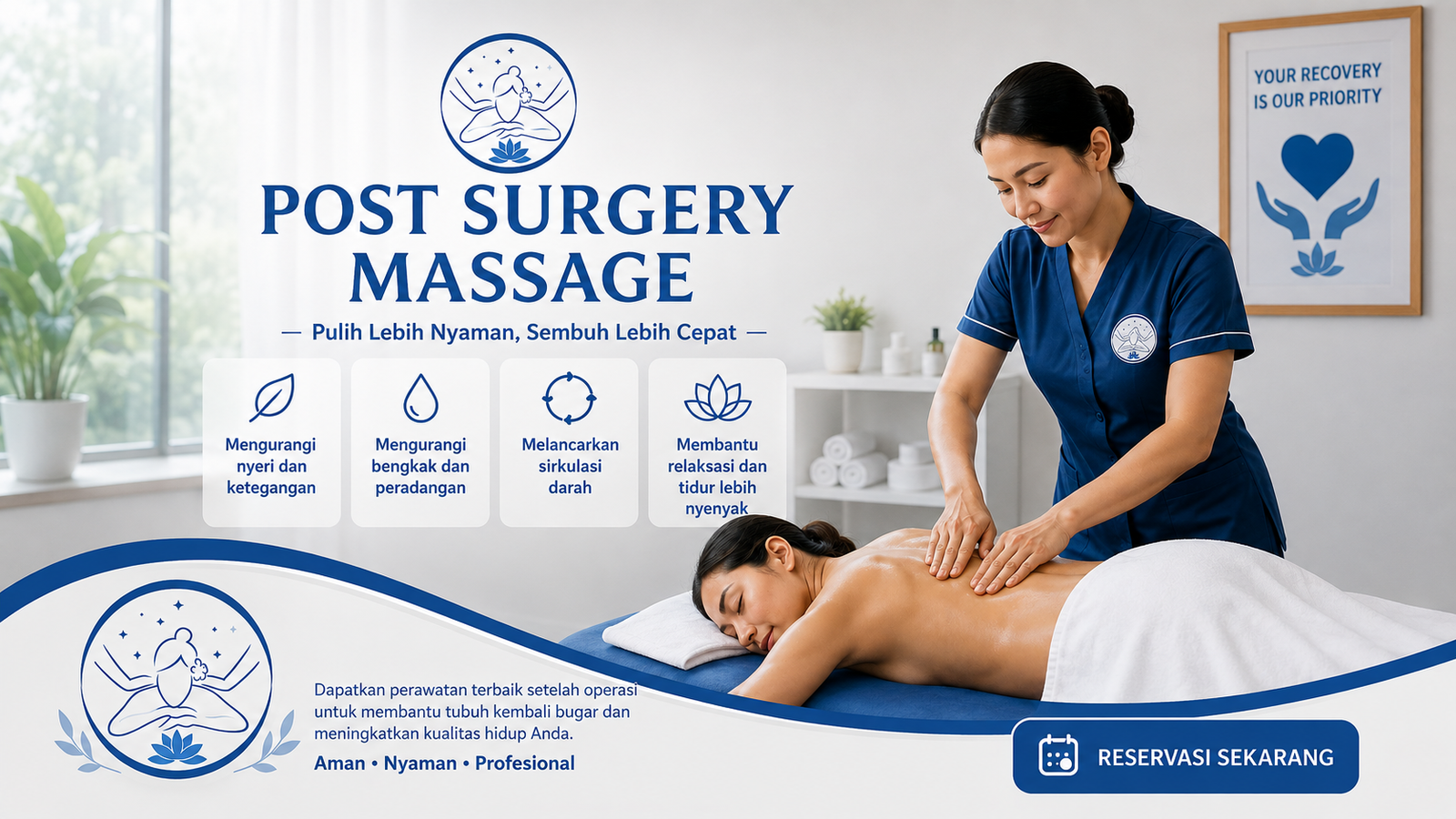
Post Surgery Lymphatic Massage in Bali Recovery Guide
Post Surgery Lymphatic Massage can become an important part of a comfortable recovery when swelling, tightness, fluid retention, and limited movement continue after an operation. Many people in Bali who have recently undergone cosmetic, orthopedic, or other procedures ask the same practical question: how can I support my recovery without putting unnecessary pressure on the healing body?
The answer is not simply to book the strongest massage available. Recovery massage requires a different approach, careful timing, communication with the medical team, and a therapist who understands that recently operated tissue needs gentle handling. For visitors staying in Bali, Bali Home Massage can also be a convenient option when travelling to a busy spa or clinic feels uncomfortable during recovery.
Why Post Surgery Lymphatic Massage Is Different From Regular Massage
One of the biggest mistakes people make after surgery is assuming that more pressure means better results. During normal massage, deeper pressure may sometimes be appropriate. After surgery, however, the treatment needs to respect healing tissue, incisions, bruising, swelling, sensitivity, and the individual recovery plan.
Post Surgery Lymphatic Massage generally uses light, controlled movements rather than aggressive kneading. The purpose is to work with the body’s lymphatic pathways and support comfortable fluid movement rather than forcefully manipulate swollen tissue.
The timing also matters. There is no universal number of days that applies to every surgery. Someone recovering from liposuction may have different needs from someone recovering from breast surgery, abdominal surgery, knee replacement, or another procedure.
Cleveland Clinic notes that lymphatic drainage massage may be used to help with swelling and lymphedema, but it is not suitable for everyone. Conditions such as blood clots, deep vein thrombosis, infection, cellulitis, certain heart conditions, kidney failure, and fever require medical consideration before treatment.
That is why a responsible Post Surgery Lymphatic Massage session should begin with questions about the procedure, surgery date, current symptoms, medications, wound condition, and medical clearance.
When Can You Have Post Surgery Lymphatic Massage?
This is one of the most common questions people ask when searching for Post Surgery Lymphatic Massage in Bali.
There is no single safe starting day for every patient.
The appropriate timing depends on the type of surgery, the surgeon’s instructions, the condition of the incision, the presence of drains or other medical devices, current swelling, medication, and whether there are signs of complications.
For example, Cleveland Clinic advises discussing massage with a healthcare provider when surgery has occurred recently and specifically identifies surgery within the previous 48 hours as a situation requiring caution.
For this reason, patients should not use an online article as permission to begin treatment. The surgeon or qualified medical professional who understands the procedure should determine whether massage is appropriate.
A professional Post Surgery Lymphatic Massage therapist should be comfortable asking for medical clearance rather than promising treatment to everyone who makes a booking.
What Does Post Surgery Lymphatic Massage Actually Feel Like?
People sometimes expect postoperative massage to feel like a traditional Balinese massage. That expectation can lead to disappointment or even an inappropriate treatment choice.
A properly adapted Post Surgery Lymphatic Massage is generally gentle. The therapist may use slow and rhythmic hand movements around appropriate areas while avoiding direct pressure over vulnerable wounds or sensitive tissue.
The objective is comfort and appropriate fluid movement, not pain.
A useful practical rule is simple: if a technique causes sharp pain, significant discomfort, unusual heat, increased bleeding, or a sudden worsening of symptoms, the treatment should stop and the situation should be assessed.
The therapist should also adjust positioning. A recently operated client may struggle to lie face down, turn from one side to another, or remain in one position for a long period. Pillows and supportive positioning can make the session substantially more comfortable.
How Post Surgery Lymphatic Massage May Support Recovery
Supporting Comfort When Swelling Is Present
Swelling is a common part of many surgical recoveries. However, the amount and duration of swelling vary significantly between procedures and individuals.
Post Surgery Lymphatic Massage may help some people feel less congested or uncomfortable when fluid accumulation is contributing to tightness.
Research also shows that results are not identical across all surgeries. Some studies have reported improvements in postoperative swelling and pain, while other research has found limited or no meaningful benefit for certain procedures.
This is an important point because a trustworthy therapist should not promise that lymphatic massage will automatically accelerate healing.
Helping You Feel More Comfortable Moving
Postoperative swelling can make ordinary movement feel awkward. A swollen abdomen, leg, arm, or other area may feel tight or heavy.
When appropriate, Post Surgery Lymphatic Massage may be used as one supportive component of a broader recovery plan.
It should not replace prescribed physiotherapy, walking instructions, compression, medication, wound care, or follow up appointments.
For some orthopedic procedures, evidence has been mixed. A randomized trial involving knee replacement patients found some early improvements in swelling and pain with manual lymphatic drainage, while other studies and later reviews have not supported routine use for every knee replacement patient.
The practical lesson is to match the treatment to the individual rather than assuming that every surgery requires the same protocol.
Supporting a More Relaxed Recovery Experience
Recovery is not only physical. Being unable to move normally, sleeping differently, and dealing with temporary swelling can make people feel frustrated.
A gentle Post Surgery Lymphatic Massage session may provide a calm environment during a period when the body needs rest.
This does not mean massage treats every aspect of recovery. It simply means that a carefully performed session can be a supportive wellness experience when medically appropriate.
Post Surgery Lymphatic Massage After Cosmetic Procedures
Cosmetic procedures are among the situations where people frequently search for Post Surgery Lymphatic Massage.
Common examples include liposuction, abdominoplasty, breast procedures, and other body contouring procedures.
The important point is that the lymphatic pathways may change after surgery.
Research examining abdominal lymphatic drainage after abdominoplasty found that the normal drainage pattern can change substantially after the procedure. The researchers concluded that postoperative lymphatic drainage techniques may therefore need to be modified rather than simply copied from a standard approach.
This finding has a very practical implication.
A therapist should not treat the body as though nothing has changed simply because the client knows the location of the lymph nodes. Postoperative anatomy and tissue conditions can require a more careful treatment strategy.
Research involving people recovering from liposuction and lipoabdominoplasty has also reported reductions in pain, swelling, and tissue fibrosis in a small clinical study using manual lymphatic drainage alongside therapeutic ultrasound.
However, a small study does not mean every patient will experience the same result. Individual recovery remains the priority.
Choosing Bali Lymphatic Massage After Surgery
For someone recovering in Bali, choosing the right provider can be more important than choosing the closest provider.
When searching for Bali Lymphatic Massage, look beyond phrases such as relaxing massage, detox massage, or luxury wellness treatment.
Instead, ask practical questions.
Does the Therapist Understand Postoperative Clients?
A therapist providing Post Surgery Lymphatic Massage should understand that postoperative treatment is different from ordinary relaxation massage.
Ask whether the therapist has experience adapting pressure, positioning, and treatment areas for clients who are recovering from surgery.
Does the Therapist Ask About Your Surgery?
A professional consultation should include questions about the procedure, date of surgery, current symptoms, wound condition, medications, and instructions from your surgeon.
If a provider immediately promises a strong massage without asking any questions, that should be treated as a warning sign.
Can the Therapist Work Around Sensitive Areas?
Incisions, bruising, drains, swelling, and areas of altered sensation require special consideration.
The treatment should be adapted instead of forcing a standard routine.
Is Home Treatment Appropriate?
For clients who are staying in a villa or hotel, Bali Home Massage may reduce the physical effort required to travel.
However, convenience should never override safety. The therapist still needs to determine whether the client is suitable for treatment in a home setting.
Practical Experience: What a Good Session Should Look Like
A useful way to evaluate Post Surgery Lymphatic Massage is to consider what happens before, during, and after the session.
Before treatment, the therapist should ask about the surgery and current recovery status.
During treatment, communication should continue. If the client feels uncomfortable, the technique or position should be adjusted.
After treatment, the client should not be encouraged to immediately return to strenuous activity simply because the massage feels good.
A thoughtful session is usually less about doing more and more about doing the appropriate amount.
This is particularly important in Bali, where visitors sometimes combine recovery with sightseeing, long transfers, beach activities, restaurant visits, and other physical activities. The body may need significantly more rest than the holiday schedule suggests.
A Practical Recovery Scenario
Consider a visitor who has recently had a cosmetic procedure and is staying in Seminyak.
The person notices abdominal swelling and tightness and searches for Post Surgery Lymphatic Massage.
The first step should not be booking the strongest available massage.
The safer approach is to confirm that the surgeon has approved lymphatic treatment, provide the therapist with the relevant postoperative information, and explain where swelling and sensitivity are present.
The therapist can then adapt the session accordingly.
This scenario illustrates an important principle: Bali Lymphatic Massage after surgery should be personalized rather than treated as a standard spa service.
The same principle applies whether the client is staying in Seminyak, Canggu, Ubud, Sanur, Nusa Dua, or another part of Bali.
What To Avoid After Surgery
Avoid Deep Pressure Without Medical Approval
Deep tissue techniques are not automatically appropriate for recently operated tissue.
A stronger massage may increase discomfort and may not provide the outcome the client expects.
Avoid Treating Severe Swelling as a Normal Massage Problem
Not every swollen area is simply postoperative fluid.
Sudden or significant swelling, severe pain, redness, fever, shortness of breath, chest pain, or other concerning symptoms should be assessed medically rather than treated as a routine massage issue.
Avoid Self Massage Without Proper Guidance
Self lymphatic massage can sound simple, but technique matters.
Cleveland Clinic recommends speaking with a healthcare provider before attempting lymphatic self massage, particularly when a person has a medical condition or is recovering from treatment.
Avoid Promises About Detox
One of the most common marketing problems in the wellness industry is presenting lymphatic massage as a guaranteed detox solution.
A more accurate approach is to explain what the treatment may support, especially regarding swelling and comfort, while recognizing that the evidence differs according to the medical condition and type of surgery.
How Often Should You Have Post Surgery Lymphatic Massage?
There is no universal schedule for Post Surgery Lymphatic Massage.
Some patients may be advised to have several sessions as part of a postoperative care plan. Others may not need lymphatic massage at all.
The correct frequency depends on the procedure, symptoms, healing progress, and medical recommendations.
Rather than selling a fixed package immediately, a responsible provider should evaluate the client’s situation and recommend a reasonable approach.
This is especially important for travelers who may only be in Bali for a few days. A short stay does not mean the recovery process can be compressed into a few intensive treatments.
How To Prepare for Bali Lymphatic Massage After Surgery
Before your Bali Lymphatic Massage appointment, prepare a few basic details.
Tell the therapist what procedure you had and when it was performed.
Explain where the swelling is located and whether the area is painful or unusually sensitive.
Bring or have access to your surgeon’s instructions if necessary.
Wear comfortable clothing that makes changing and positioning easier.
Allow enough time after the session to rest rather than immediately scheduling a physically demanding activity.
If you are staying at a villa, make sure the treatment area is comfortable, private, and easy for the therapist to access.
Questions To Ask Your Therapist Before Booking
Before booking Post Surgery Lymphatic Massage, ask:
- Do you have experience working with postoperative clients?
- Do you adjust the technique according to the type of surgery?
- What information do you need about my procedure?
- Do you require medical clearance when appropriate?
- Can you avoid areas that are still healing or sensitive?
- Can the treatment be provided at my villa or hotel?
- What symptoms would make you recommend contacting my doctor instead of receiving massage?
These questions can quickly reveal whether the service is focused on professional care or simply selling a standard massage session.
FAQ About Post Surgery Lymphatic Massage
Is Post Surgery Lymphatic Massage safe after surgery?
Post Surgery Lymphatic Massage may be appropriate for some people, but it is not automatically safe for every postoperative client. The type of surgery, recovery stage, medical history, wounds, medications, and current symptoms all matter.
Medical clearance should be obtained when appropriate, particularly when the procedure was recent or complications are suspected.
How soon after surgery can I have lymphatic massage?
There is no universal timeline. Your surgeon or healthcare provider should determine when treatment is appropriate for your specific procedure.
A therapist should never use a generic number of days as a substitute for medical advice.
Does Post Surgery Lymphatic Massage reduce swelling?
It may help some patients manage postoperative swelling, but results vary according to the procedure and individual recovery.
Clinical research has reported benefits in some postoperative settings, while other studies have found limited benefits in different surgical populations.
Can I have Post Surgery Lymphatic Massage at my Bali villa?
In some situations, yes. Bali Home Massage can be convenient when travelling is uncomfortable.
However, home treatment should still follow the same safety principles as treatment in a clinic or studio. The therapist should assess whether the client is suitable before beginning.
Is Bali Lymphatic Massage the same as Balinese massage?
No.
Traditional Balinese massage and postoperative lymphatic treatment have different purposes and techniques.
A regular Balinese massage may involve more pressure, stretching, or broader bodywork. Bali Lymphatic Massage for postoperative recovery should be adapted to the client’s medical situation and should generally use much gentler techniques.
Can lymphatic massage speed up healing?
It should not be presented as a guaranteed way to speed healing.
Healing depends on the procedure, individual health, wound care, nutrition, rest, prescribed rehabilitation, and medical follow up.
Post Surgery Lymphatic Massage may support comfort or help manage swelling in appropriate cases, but it does not replace medical care.
Practitioner Insight: The Most Important Part Is Individualization
The most useful lesson when arranging Post Surgery Lymphatic Massage is that every postoperative body has a different recovery story.
Two people can undergo the same procedure and experience very different levels of swelling, sensitivity, mobility, and comfort.
A good treatment therefore begins with observation and communication.
The therapist should not be trying to prove how much pressure they can use. The goal is to provide an appropriate treatment that respects the current condition of the body.
This approach also builds trust.
For visitors in Bali, trust becomes particularly important because the therapist may be working with someone who is away from their regular surgeon, physiotherapist, or healthcare team.
A professional Bali Lymphatic Massage service should therefore know its limits and recognize when the client needs medical evaluation instead of massage.
Why Professional Judgment Matters After Surgery
Evidence around manual lymphatic drainage is not universally positive for every postoperative condition.
For example, research in breast cancer surgery has found that manual lymphatic drainage does not consistently prevent or reduce lymphedema across all patients.
Likewise, research in knee replacement has produced mixed findings regarding routine postoperative lymphatic drainage.
These findings do not mean lymphatic treatment is useless.
They mean the treatment should be used selectively and realistically.
That distinction is essential for Helpful Content because readers need practical information rather than exaggerated promises.
Post Surgery Lymphatic Massage in Bali: The Practical Takeaway
If you are considering Post Surgery Lymphatic Massage in Bali, start with your medical situation rather than the massage menu.
Confirm that your healthcare provider considers massage appropriate.
Choose a therapist who understands postoperative clients.
Explain your surgery, recovery stage, symptoms, and sensitive areas.
Expect gentle, individualized treatment rather than deep pressure.
Use Bali Lymphatic Massage as a supportive component of recovery, not as a replacement for medical care.
And if you are staying in a villa or hotel, Bali Home Massage may provide additional convenience when travelling is physically demanding.
Most importantly, listen to your body. A recovery treatment should leave you feeling appropriately supported, not as though your healing tissue has been aggressively worked.
Conclusion: Choosing the Right Post Surgery Lymphatic Massage
Post Surgery Lymphatic Massage can be a useful supportive treatment for selected postoperative clients, particularly when swelling and discomfort are part of the recovery experience.
However, the quality of the treatment depends on more than the massage technique itself.
Timing, medical clearance, therapist experience, communication, positioning, pressure, and individual recovery status all influence whether treatment is appropriate.
For anyone searching for Bali Lymphatic Massage, the best provider is not necessarily the one promising the fastest results. Look for someone who asks the right questions, understands postoperative limitations, communicates clearly, and knows when medical advice is more appropriate than massage.
If you are recovering in Bali and want to understand whether a personalized Post Surgery Lymphatic Massage session may suit your situation, take the time to discuss your recovery needs with a qualified therapist before booking.
For more information about suitable recovery support in Bali, Discover More about the available treatment options and Contact the Therapist to discuss your postoperative needs before scheduling a session.
Leave a Reply