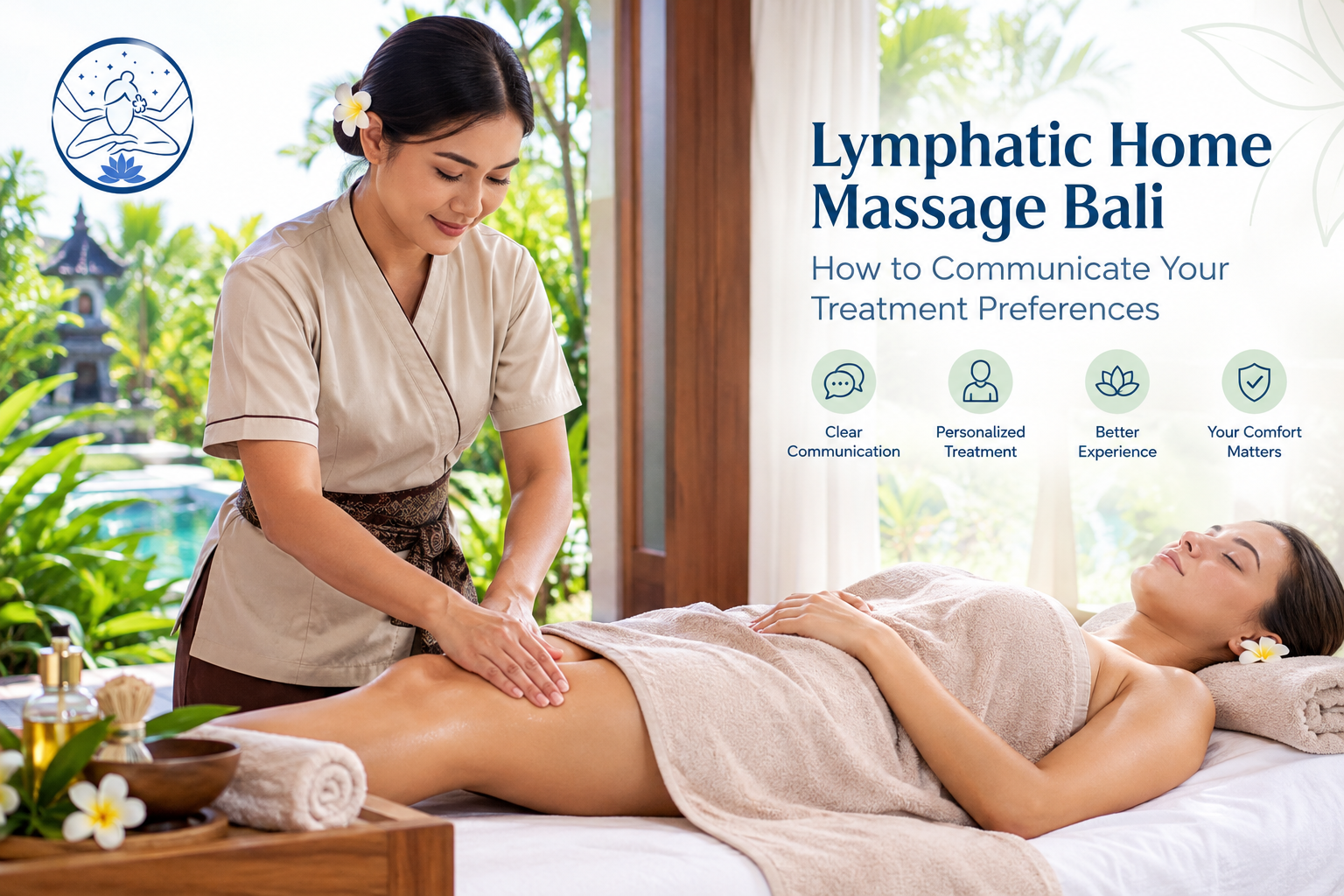
Communicate Your Treatment preferences clearly before booking a Bali Home Massage, especially when you want a lymphatic massage tailored to your comfort, health considerations, and personal goals. Many clients know they want a relaxing treatment, less puffiness, or a gentle wellness session, but they are unsure what to tell their therapist. As a result, they may receive a treatment that feels too intense, does not address their concerns, or simply differs from what they expected.
Lymphatic Massage Bali services can offer a more convenient wellness experience because the therapist comes directly to your villa, hotel, or private accommodation. However, convenience alone does not guarantee a satisfying session. Therefore, understanding how to explain your preferences, discuss your expectations, and communicate throughout the appointment can make a meaningful difference to your experience.
Why Communication Matters Before a Lymphatic Home Massage in Bali
Booking a massage at your accommodation should feel simple and comfortable. Nevertheless, a successful appointment starts before the therapist arrives. Your conversation with the service provider helps establish expectations, identify relevant health considerations, and determine whether the requested treatment is appropriate for you.
Lymphatic massage typically involves gentle, rhythmic movements intended to support the movement of lymph fluid. It differs from traditional deep tissue massage, which generally uses more intensive pressure to address muscular tension. Consequently, explaining your goals in advance helps the provider understand the type of session you expect.
Explain What You Want to Achieve
Before you book, consider the main reason you want a lymphatic treatment. Some clients seek relaxation after a busy holiday schedule, while others are interested in addressing feelings of heaviness or swelling.
Your goal should guide the conversation rather than an assumption that every massage produces the same result.
For example, you might explain that you prefer a gentle wellness treatment and want to understand what the therapist can safely offer. Alternatively, you may have been referred for specialized lymphatic care and need to confirm whether the provider has the appropriate training.
When you Communicate Your Treatment goals, the provider can explain the available options and identify any limitations before confirming your appointment.
Understand What Lymphatic Massage Can and Cannot Do
Another important step is discussing realistic expectations. A lymphatic massage is not a guaranteed weight loss treatment, and it cannot promise permanent body contouring or the removal of toxins.
Although some people may notice temporary changes in swelling or how their body feels, results vary depending on the individual and the reason for treatment.
If you have persistent swelling, unexplained fluid retention, or a diagnosed lymphatic condition, seek advice from a qualified healthcare professional before booking. In addition, people recovering from surgery should obtain clearance from their treating clinician and use a therapist specifically trained for their recovery needs.
How to Communicate Your Treatment Preferences Before Booking
A short conversation before your appointment can prevent misunderstandings later. Rather than describing your expectations vaguely, share the details that will help the provider determine whether the service is suitable.
1. Describe Your Main Concern Clearly
Start by explaining what you want from the session. You do not need to use medical terminology or know the exact name of a technique.
Instead, describe your experience in everyday language.
For example, you could say, “I am looking for a gentle lymphatic massage for relaxation. I would like to understand whether your service is suitable for my needs.”
If your concern involves swelling, mention where it occurs, how long you have experienced it, and whether a healthcare professional has evaluated it. This information can help the provider recognize when a massage appointment may not be the right next step.
When you Communicate Your Treatment needs clearly, you also make it easier for the therapist to explain what the session can reasonably accomplish.
2. Ask About the Therapist’s Training and Experience
Not every massage therapist has the same qualifications. Therefore, it is important to ask whether the practitioner has specific training in manual lymphatic drainage or another relevant lymphatic technique.
A professional provider should be able to explain their training, the type of treatment they offer, and the situations in which they would recommend medical assessment instead.
Useful questions include:
- What lymphatic massage techniques do you provide?
- Have you received specialized training in manual lymphatic drainage?
- Is this service suitable for my stated goals?
- What health information do you need before the appointment?
- Do you have experience providing treatments in private accommodation?
These questions are especially useful when comparing professional lymphatic massage services in Bali. A trustworthy provider should welcome reasonable questions rather than guarantee results or pressure you into booking.
3. Discuss Pressure and Touch Preferences
Lymphatic techniques are generally gentle. Therefore, requesting strong pressure because you expect a more effective result may not be appropriate.
Tell your therapist whether you are sensitive to touch, prefer a slower pace, or feel uncomfortable with particular areas being treated. You can also explain whether you want a quiet session or prefer occasional explanations during the treatment.
For example, say, “I prefer a gentle approach and would like you to check in with me before changing techniques.”
This simple request gives both parties a clear starting point. Moreover, it reinforces the understanding that comfort and consent remain important throughout the appointment.
4. Explain Relevant Health Considerations
Before arranging a lymphatic session, disclose health concerns that could affect its suitability. These may include a history of blood clots, heart or kidney problems, active infection, unexplained swelling, or recent surgery.
Some conditions require medical assessment or specific precautions. In particular, sudden swelling in one leg, especially when accompanied by pain, warmth, or redness, needs urgent medical evaluation rather than massage.
People with certain heart conditions or kidney conditions may also need professional advice before receiving treatment intended to influence fluid movement.
When you Communicate Your Treatment history honestly, the provider can make a more informed decision about whether to proceed, modify the service, or recommend medical guidance first.
5. Confirm the Appointment Details
Communication also involves practical arrangements. Since the therapist will be visiting your accommodation, confirm the location, appointment time, session duration, total price, and any additional travel charges.
Ask whether the provider brings a massage table, towels, and other necessary equipment. Additionally, check whether you need to prepare a quiet space or provide anything before the appointment.
If you are staying in a resort or villa complex, explain the entrance procedure and any access restrictions. This small detail can prevent unnecessary delays.
For a convenient Bali home massage service, clear arrangements allow you to focus on your appointment rather than solve logistical problems when the therapist arrives.
What to Tell Your Therapist Before the Session Begins
Even after discussing your preferences during booking, take a few minutes to review them in person. Your needs may have changed, or you may have additional questions once the therapist explains the session.
Share Your Expectations in Simple Language
You do not need a lengthy explanation. A brief summary of your goals, comfort level, and relevant health considerations is usually more useful than a vague request for the best treatment.
For example, you might say that you want a gentle session focused on relaxation and that you would like the therapist to explain the technique before beginning.
If you are seeking treatment for a diagnosed condition, clarify whether your clinician has recommended lymphatic therapy and whether you have any specific instructions.
This is a practical way to Communicate Your Treatment expectations without assuming that a standard wellness massage is equivalent to clinical care.
Establish Boundaries Before Touch Begins
A professional appointment should allow you to discuss areas you do not want touched. You can also request additional draping, a change in positioning, or a pause at any point.
For instance, if you are uncomfortable with abdominal treatment, explain that before the session starts. The therapist can then discuss whether an appropriate alternative is possible.
Likewise, you should feel free to ask for clarification if a technique is unfamiliar. A good practitioner explains the intended approach and respects your decision if you decline a particular part of the session.
Agree on How You Will Communicate During the Massage
Some clients prefer a quiet treatment, while others appreciate regular check ins. Tell your therapist which approach makes you feel comfortable.
You could request a brief check in at the beginning and midway through the appointment. Alternatively, you can explain that you will speak up if anything feels uncomfortable.
Importantly, lymphatic massage should not be painful. Stop the session if you experience pain, dizziness, unusual discomfort, or other concerning symptoms.
Practical Phrases to Help You Communicate Your Treatment Preferences
If English is not your first language, preparing a few sentences before your appointment can make the conversation easier. The following examples can help you explain your needs clearly.
| Your concern | What you can say |
|---|---|
| You prefer gentle pressure | “Please use gentle techniques and check whether I feel comfortable.” |
| You want relaxation | “My main goal is relaxation rather than intensive bodywork.” |
| You have a medical concern | “I have a health condition. Can you explain whether this treatment is suitable?” |
| You have recent surgical history | “I recently had surgery and need to confirm that this service is appropriate.” |
| You want to avoid a specific area | “Please do not treat this area without discussing it with me first.” |
| You want to understand the technique | “Could you explain what you will do before we begin?” |
| You need a quiet appointment | “I would prefer a quiet session with minimal conversation.” |
These phrases are useful starting points, but they do not replace medical advice where it is needed.
When you Communicate Your Treatment preferences with direct, respectful language, you give your therapist a clearer understanding of your expectations. Consequently, the appointment is more likely to begin with a shared understanding of the service.
How to Choose the Right Bali Home Massage Provider
A convenient booking process is important, but service quality deserves equal attention. Before selecting a provider, review the available information and ask questions that help you assess professionalism.
Check Service Information and Qualifications
Look for a clear description of the lymphatic massage offered. The provider should explain the nature of the session, the therapist’s relevant training, and any restrictions that may apply.
Be cautious of advertisements promising guaranteed detoxification, dramatic fat loss, or immediate medical results. Such claims are not reliable indicators of professional care.
Instead, prioritize transparent communication, realistic expectations, and a willingness to discuss your individual circumstances.
Compare Pricing and Inclusions
The lowest advertised price does not necessarily represent the best value. Check the session length, travel fees, equipment provided, and cancellation policy before making a decision.
If you are comparing Bali in villa massage services, make sure you are comparing similar treatment types and durations.
For example, a general relaxation massage and a specialized lymphatic treatment may require different training and techniques. Therefore, price comparisons are most useful when the services themselves are clearly explained.
Look for Professional Communication
Pay attention to how the provider responds to your questions. Clear answers, respectful language, and appropriate questions about your needs are positive signs.
On the other hand, pressure to book immediately, refusal to explain the treatment, or promises of guaranteed medical results should prompt further consideration.
A reliable provider should also be willing to explain when they cannot offer a service safely.
A Practical Example: Preparing for an In Villa Massage Appointment
Consider a hypothetical visitor staying in a private villa in Bali. After several busy days of travel, the visitor feels uncomfortable and wants a gentle wellness session.
Rather than booking immediately, the visitor contacts a massage provider and explains the main goal. The visitor asks whether the therapist has training in lymphatic techniques, how long the appointment lasts, and whether the treatment is appropriate for someone without a diagnosed lymphatic condition.
The provider explains the service, asks relevant screening questions, and clarifies that the session is intended for general wellness rather than medical treatment.
Before confirming, the visitor checks the price, appointment time, and equipment arrangements. On arrival, both parties review the preferred pressure, areas to avoid, and the visitor’s communication preferences.
This example illustrates how preparation can reduce uncertainty and improve the booking experience. It is a hypothetical scenario, not a documented clinical case, and it does not establish that massage will produce a particular health outcome.
The key lesson is simple: when you Communicate Your Treatment needs early, you can make a more informed booking decision and establish expectations before the session begins.
Professional Tips for a More Comfortable Lymphatic Massage Experience
Small preparations can make your appointment easier. The following suggestions focus on practical steps you can take before and during your session.
Prepare Your Space
Choose a quiet, comfortable area with sufficient room for the therapist’s equipment. Make sure the floor is clear and that the room offers reasonable privacy.
If you are staying at a hotel, check whether outside therapists are permitted to enter the property. Some accommodations have specific visitor procedures that need to be followed.
Stay Hydrated Normally
Drink water according to your usual needs and any medical advice you have received. There is no need to force yourself to drink excessive amounts of water before or after a massage.
Similarly, avoid assuming that increased urination or temporary changes in body weight prove that the treatment has removed toxins.
Do Not Ignore New or Unexplained Symptoms
Massage is not an appropriate substitute for medical assessment. If you develop sudden swelling, severe pain, fever, redness, shortness of breath, or other concerning symptoms, seek appropriate medical care rather than proceeding with a wellness appointment.
Shortness of breath or chest pain may require emergency assistance.
Give Feedback Without Feeling Awkward
You are allowed to change your mind during the appointment. If the pressure feels uncomfortable, ask the therapist to stop or adjust the approach.
A professional practitioner should respond respectfully. In addition, you should never feel obliged to continue a treatment simply because you have already paid for it.
Being able to Communicate Your Treatment preferences throughout the session supports informed consent and helps maintain clear boundaries.
Common Mistakes to Avoid When Booking Lymphatic Massage in Bali
Even well prepared clients can overlook details that affect their experience. Fortunately, a few simple changes can help avoid common problems.
Assuming Every Lymphatic Treatment Is the Same
Different practitioners may offer different techniques and levels of specialization. Therefore, ask what the service actually includes rather than relying on the treatment name alone.
Requesting Stronger Pressure for Better Results
Lymphatic techniques generally use gentle movements. Stronger pressure does not automatically produce better results and may be inappropriate for certain conditions.
Withholding Important Health Information
Your therapist needs relevant information to assess suitability. Disclosing recent surgery, diagnosed conditions, or unexplained symptoms helps identify situations that require medical guidance.
Failing to Confirm the Total Cost
Always confirm the full price before booking. This includes the treatment duration, transport fees, and any other charges that may apply.
Expecting Guaranteed Results
Individual responses vary. A responsible provider should explain the service honestly without promising specific medical outcomes or dramatic physical changes.
By avoiding these mistakes, you can make a more informed choice and approach your appointment with realistic expectations.
Frequently Asked Questions About Lymphatic Home Massage in Bali
1. How Do I Communicate My Treatment Preferences Before Booking a Bali Home Massage?
Start by explaining your main goal, preferred pressure, relevant health concerns, and any areas you do not want treated. Then ask about the therapist’s qualifications, session duration, price, and the techniques included.
It is also helpful to confirm how you can communicate discomfort or request changes during the appointment.
2. Is Lymphatic Massage Suitable for Everyone?
No. Suitability depends on your health, symptoms, and treatment goals. Certain conditions, including some heart or kidney problems, active infections, and suspected blood clots, require medical assessment or specific precautions.
If you have unexplained swelling or a diagnosed medical condition, consult an appropriate healthcare professional before booking.
3. What Should I Tell My Therapist Before a Lymphatic Massage?
Explain your goals, relevant medical history, recent surgery, medications when relevant to treatment safety, and any areas of discomfort. You should also mention whether a healthcare professional has recommended lymphatic treatment.
This information helps the therapist assess whether the requested service is appropriate.
4. Can I Request Gentle Pressure During a Bali Home Massage?
Yes. You can communicate your comfort preferences before and during the session. Lymphatic techniques generally use gentle, controlled movements rather than the deep pressure associated with some other massage styles.
If you experience pain or unusual discomfort, ask the therapist to stop.
5. How Long Does a Lymphatic Home Massage Appointment Take?
The duration depends on the provider, treatment type, and your individual needs. Ask whether the advertised appointment includes preparation time and consultation, or whether those activities are separate.
Confirming the duration before booking helps you plan your day and avoid misunderstandings.
6. Should I Book a Lymphatic Massage After Surgery?
Do not book postoperative lymphatic treatment without clearance from your treating clinician. Recovery requirements vary, and some procedures require specialized techniques performed by appropriately trained practitioners.
Ask your clinician what type of treatment is suitable, when it may begin, and which areas should be avoided.
7. How Can I Find a Reliable Lymphatic Massage Service in Bali?
Look for transparent service descriptions, relevant practitioner training, clear prices, and professional communication. Ask about screening procedures and the provider’s approach to clients with medical concerns.
Avoid providers who guarantee cures, promise dramatic weight loss, or dismiss questions about treatment safety.
8. Can I Ask for Changes During the Massage?
Absolutely. You can request adjustments, ask questions, decline a technique, or stop the appointment at any time. Clear communication is an essential part of a respectful treatment experience.
A professional therapist should listen to your feedback and respect your boundaries.
Conclusion: Communicate Your Treatment Preferences With Confidence
A positive lymphatic massage experience begins with clear communication, realistic expectations, and careful provider selection. Before arranging a Bali Home Massage, identify your goals, ask about the therapist’s training, discuss relevant health concerns, and confirm the appointment details.
During the session, explain your preferred pressure, establish personal boundaries, and speak up if something feels uncomfortable. Equally important, remember that lymphatic massage is not suitable for every medical condition and should never replace necessary medical assessment.
When you Communicate Your Treatment needs clearly, you can approach the booking process with greater confidence and make a more informed decision about the service you choose.
If you are looking for a convenient massage experience at your villa, hotel, or private accommodation, take time to review the available services and discuss your preferences before confirming your appointment.
Explore Massage Services to discover suitable options for your stay in Bali, and Get A Free Consultation to discuss your preferences and determine which service may be appropriate for your needs.
Leave a Reply