How Often Should You Get a Lymphatic Massage
Get a Lymphatic Massage when your body feels unusually heavy, puffy, or swollen, but the right frequency depends on why you want the treatment in the first place. Some people benefit from occasional sessions for relaxation and temporary puffiness, while others may need a structured series of treatments when dealing with medically diagnosed swelling.
One question I often hear from clients looking for Home Spa Bali treatments is, “How often should I actually book a lymphatic massage?” The answer is not simply once a week or once a month. A useful schedule depends on your symptoms, your goals, your recovery stage, and how your body responds after each session.
For visitors in Bali, this matters even more. Long flights, extended periods of sitting, hot weather, changes in routine, travel fatigue, and increased activity can all make the body feel different. However, not every type of swelling means you need lymphatic drainage. Understanding the reason behind your symptoms is the first step toward choosing the right treatment frequency.
How Often Should You Get a Lymphatic Massage?
For general wellness, many people choose to Get a Lymphatic Massage occasionally rather than following a strict weekly schedule. A session every few weeks or once a month may be suitable for someone who simply enjoys the gentle technique and wants a relaxing wellness experience.
However, people receiving lymphatic drainage for a specific medical reason may require a much more structured schedule. In professional lymphedema care, treatment can sometimes be performed several times per week during an intensive phase, followed by less frequent maintenance care. The exact plan should be determined by a qualified healthcare professional or appropriately trained therapist.
This distinction is important because lymphatic drainage massage is not the same as a conventional relaxation massage. The technique uses light, rhythmic movements rather than deep pressure. Manual lymphatic drainage is particularly relevant for certain forms of swelling and lymphedema.
A Practical Frequency Guide
If you are trying to decide how often to Get a Lymphatic Massage, consider these general situations:
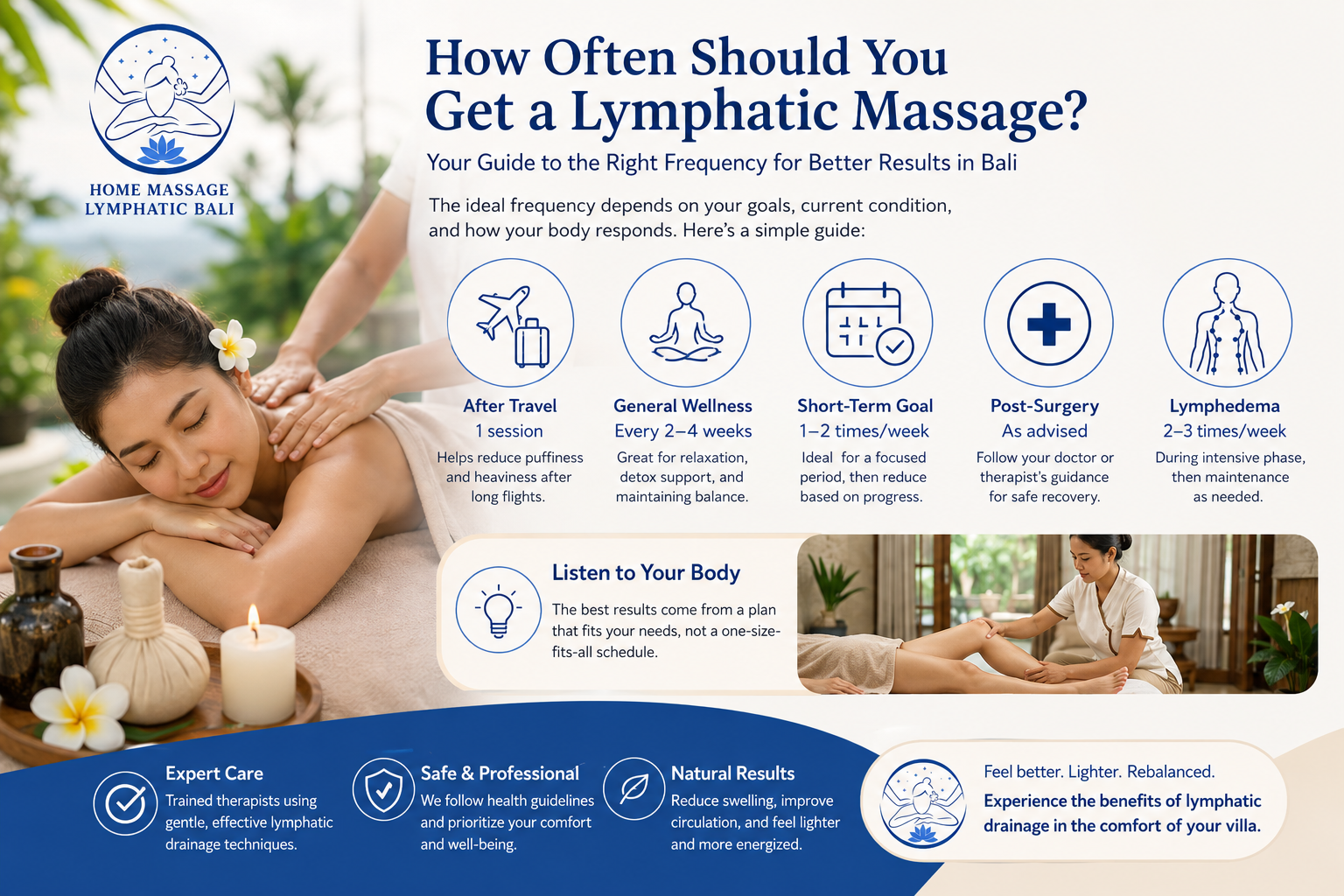
For occasional wellness: One session every two to four weeks may be a reasonable starting point if you have no diagnosed lymphatic condition and simply enjoy the treatment.
For travel related puffiness: One session after a long journey may be enough for some people, particularly when combined with walking, hydration, adequate rest, and normal movement.
For a short term wellness goal: Some clients prefer one or two sessions per week for a limited period, then reduce the frequency once they feel they have reached their desired level of comfort.
For post procedure recovery: Never assume that more sessions are better. Your surgeon or healthcare provider should determine when treatment can begin and how frequently it should be performed.
For diagnosed lymphedema: Frequency can be significantly higher during an intensive treatment phase and may later move into a maintenance schedule. Medical guidance is essential in this situation.
The most useful approach is to start with your reason for booking rather than choosing a frequency simply because it is popular online.
Why Your Reason for Getting Lymphatic Drainage Matters
When someone asks me how often they should Get a Lymphatic Massage, I first want to know what they are trying to improve.
Are they dealing with persistent swelling?
Are they recovering from a procedure?
Do they feel puffy after travelling?
Are they looking for a relaxing treatment?
Or are they interested because they have seen social media claims about detoxification and weight loss?
These situations should not be treated as if they are identical.
Lymphatic drainage massage has its strongest medical application in situations involving impaired lymphatic drainage and swelling, particularly lymphedema. It may also be incorporated into certain postoperative recovery plans when recommended by a healthcare professional.
For otherwise healthy people, claims that lymphatic massage dramatically detoxifies the body, boosts immunity, or causes significant fat loss are not supported by strong evidence. UCLA Health specifically notes that there is not substantial scientific evidence for these broad wellness claims.
That does not mean a wellness session has no value. A gentle treatment can feel relaxing, and some people report temporary relief from feelings of heaviness or puffiness. The important point is to have realistic expectations.
Signs You May Be Booking Too Frequently
More treatments do not automatically mean better results.
One of the practical mistakes people make is booking repeated sessions without paying attention to how their body responds. If you feel comfortable after treatment and your therapist believes the frequency is appropriate, continuing may be reasonable.
However, if you experience persistent discomfort, unusual fatigue, nausea, worsening swelling, or other concerning symptoms, you should stop and reassess rather than immediately booking another session.
Lymphatic drainage should generally be gentle. It should not feel like a deep tissue treatment. Professional guidance also emphasizes that heavy pressure should be avoided because inappropriate pressure can irritate tissue and potentially worsen edema.
A good treatment plan is therefore based on response, not simply on the number of appointments.
What Happens When You Get a Lymphatic Massage Regularly?
When clients Get a Lymphatic Massage regularly, the experience can vary considerably from person to person.
Someone with occasional travel related puffiness may notice that they feel lighter or more comfortable after a session.
Someone with medically diagnosed lymphedema may need a more comprehensive treatment plan involving lymphatic drainage, compression, exercise, skin care, and ongoing medical supervision. Massage alone should not be presented as a complete treatment for lymphedema.
For wellness clients, consistency can also make it easier to understand how their body responds to the treatment. Instead of booking randomly, you can observe whether you actually feel a meaningful benefit and adjust the schedule accordingly.
This is one reason I prefer discussing the client’s objective before recommending a treatment frequency.
Benefits You May Notice From Lymphatic Drainage Massage
Temporary Relief From Feelings of Puffiness
One of the most common reasons people Get a Lymphatic Massage in Bali is the sensation of puffiness after travelling.
Long periods of sitting can make the legs and feet feel uncomfortable. Hot weather and changes in daily activity can also affect how your body feels.
A gentle lymphatic treatment may provide a relaxing experience and can be useful in appropriate situations involving fluid accumulation. However, unexplained or persistent swelling should not automatically be attributed to travel.
A Gentle Alternative to Deep Massage
Lymphatic drainage is very different from traditional deep tissue massage.
If you prefer a light touch, slow movements, and a calmer treatment experience, lymphatic drainage may feel more suitable than a firm massage.
A proper lymphatic technique uses gentle rhythmic movements because the relevant lymphatic structures are located close to the skin.
Support During Appropriate Recovery Plans
Some people Get a Lymphatic Massage following surgery or other procedures because lymphatic techniques may be included in a professional recovery plan.
The key word is appropriate.
You should not schedule a lymphatic massage immediately after a procedure simply because someone online recommended it. Timing depends on the type of procedure, your healing progress, your medical history, and your healthcare provider’s instructions.
A Relaxing Wellness Experience
Not every massage needs to have a medical purpose.
For healthy adults, lymphatic massage may simply be part of a broader wellness routine. The treatment can be calm and relaxing, especially when performed in a comfortable private setting.
This can make a lymphatic treatment particularly appealing for people staying in Bali who want a quiet wellness experience without spending additional time travelling to a busy location.
Realistic Examples of How Often to Get a Lymphatic Massage
Example 1: The Bali Traveler
Imagine arriving in Bali after a long international flight. You have spent many hours sitting, slept poorly, and now your legs feel heavy.
In this situation, deciding to Get a Lymphatic Massage may be reasonable as a wellness choice if you have no medical contraindications.
You may not need five sessions in one week. One gentle session followed by normal movement, hydration, rest, and a balanced routine may be sufficient.
If the swelling is severe, one sided, painful, sudden, or unusual for you, massage should not be the first response. Medical evaluation may be more appropriate.
Example 2: The Wellness Client
Another client may simply enjoy lymphatic drainage as part of a regular wellness routine.
For this person, a session every few weeks may make more sense than booking several appointments close together.
The goal is not to force the body to “detox” repeatedly. Instead, the client is choosing a relaxing treatment and monitoring whether it provides a worthwhile experience.
Example 3: The Client With Persistent Swelling
This situation is very different.
If someone has persistent swelling that has been diagnosed as lymphedema, they may need an intensive treatment schedule rather than occasional spa appointments.
Professional lymphedema programs can involve treatment two or three times per week during an initial phase, and sometimes daily treatment depending on the clinical situation. The frequency can later decrease as the person moves toward maintenance care.
This is why medical lymphatic therapy should not be confused with a standard spa wellness package.
How to Prepare Before You Get a Lymphatic Massage
Before you Get a Lymphatic Massage, tell your therapist what you are experiencing.
Mention recent travel, surgery, medical diagnoses, current symptoms, medications if relevant, and any previous experience with lymphatic treatments.
A professional therapist should ask appropriate questions before starting. A proper assessment helps determine whether the treatment is suitable or whether you should seek medical advice first.
It is also useful to avoid arriving immediately after an exhausting activity. Give yourself enough time to relax and communicate with your therapist.
If you are booking a treatment in Bali, explain whether your priority is relaxation, travel related puffiness, facial puffiness, general wellness, or recovery support. This allows the therapist to understand your expectations.
When You Should Not Get a Lymphatic Massage
There are situations where you should not simply Get a Lymphatic Massage without medical advice.
Professional medical sources list conditions such as acute infection, cellulitis, blood clots, deep vein thrombosis, fever, certain heart conditions, and kidney problems among situations requiring avoidance or medical assessment.
Sudden swelling in one leg, chest pain, shortness of breath, severe redness, fever, or rapidly worsening symptoms require medical attention rather than a wellness massage.
If you have recently had surgery, ask your surgeon or healthcare provider when massage is appropriate.
If you have been diagnosed with lymphedema, consider working with a qualified professional who understands lymphatic care rather than choosing a therapist based only on a general massage qualification.
How to Choose a Lymphatic Massage Therapist in Bali
Choosing the right therapist can be more important than choosing the most frequent schedule.
Before you Get a Lymphatic Massage, ask what type of lymphatic technique the therapist performs and what training they have completed.
A therapist should understand that lymphatic drainage is not simply a lighter version of deep tissue massage.
The treatment should involve appropriate pressure, deliberate movements, and an understanding of when the service should be postponed or referred to a healthcare professional.
You should also be able to explain your treatment goal clearly.
For example, you can use Lymphatic Drainage Massage in Bali as an anchor when researching local services, while Professional Lymphatic Massage Bali can be useful when comparing specialist treatment options.
If you are looking for an in villa experience, Home Massage and Lymphatic Bali can also be a useful anchor phrase when exploring private wellness services.
The most important factor is not how many sessions a provider wants to sell. It is whether the therapist takes time to understand your needs before recommending a schedule.
Practical Tips From a Therapist’s Perspective
Start Conservatively
If you have never tried lymphatic drainage before, you do not necessarily need to book a large package immediately.
Start with one session and evaluate how your body feels afterward.
This gives you useful information about whether the treatment is comfortable and worthwhile for your personal goal.
Track Your Response
After you Get a Lymphatic Massage, pay attention to how you feel over the next day.
Do you feel comfortable?
Did the sensation of heaviness improve?
Did you experience unusual discomfort?
Did the result last for hours or several days?
These observations can help you and your therapist decide whether another session makes sense.
Do Not Chase Temporary Changes
A temporary reduction in puffiness should not automatically be interpreted as fat loss.
Lymphatic drainage is primarily concerned with fluid movement, and any short term change in body measurements should be interpreted carefully.
A reputable therapist should not promise dramatic weight loss or claim that massage replaces nutrition, exercise, medical care, or other appropriate treatment.
Combine Massage With Healthy Habits
If your goal is general wellness, massage works best as part of a healthy lifestyle.
Regular movement, adequate hydration, nutritious food, sufficient sleep, and appropriate exercise all matter.
For people with diagnosed lymphedema, compression, exercise, skin care, and professional care may also be important components of management.
FAQ About How Often to Get a Lymphatic Massage
How often should you get a lymphatic massage?
There is no single frequency that works for everyone.
If you are healthy and booking for wellness, you may choose occasional sessions every few weeks or once a month. If you have a diagnosed lymphatic condition, your healthcare provider or qualified therapist may recommend a more intensive schedule.
Can I get a lymphatic massage every week?
Some people can Get a Lymphatic Massage weekly as part of a wellness routine, provided the treatment is appropriate for them.
However, weekly treatment is not automatically necessary. If you are receiving lymphatic therapy for a medical condition, follow the treatment schedule recommended by your healthcare team.
How many lymphatic massages do I need to see results?
There is no universal number.
Some wellness clients may notice a difference after one session, while people receiving treatment for lymphedema may require multiple sessions as part of a structured program.
If you have several sessions without noticeable improvement, reassessment may be more useful than simply increasing the frequency. Cleveland Clinic also recommends discussing lack of improvement with a healthcare provider.
Is it safe to get a lymphatic massage after surgery?
It can be appropriate in certain recovery plans, but the timing depends on the surgery and your individual condition.
Always obtain clearance from your surgeon or healthcare provider before you Get a Lymphatic Massage after surgery.
Can lymphatic massage help with bloating?
It depends on the cause.
Not all bloating is related to lymphatic fluid. Digestive issues, dietary changes, hormones, and other conditions can cause abdominal bloating.
If bloating is persistent, painful, severe, or accompanied by other symptoms, seek appropriate medical evaluation rather than assuming lymphatic massage is the solution.
Is lymphatic drainage massage painful?
It should generally be gentle rather than painful.
Manual lymphatic drainage uses light movements rather than the firm pressure associated with deep tissue massage. If the treatment feels painful or causes significant discomfort, tell your therapist immediately.
Can I do lymphatic massage at home?
Some people can learn simple self massage techniques, but it is better to receive proper instruction first.
A qualified professional can demonstrate appropriate movements and explain whether self treatment is suitable for your particular situation.
What Is the Best Lymphatic Massage Schedule in Bali?
For most wellness clients, the best schedule is the one that matches the reason for treatment rather than a fixed package.
If you are visiting Bali and want to relax after travelling, one session may be enough.
If you enjoy lymphatic massage as part of your wellness routine, occasional treatments may be appropriate.
If you are recovering from surgery or managing diagnosed swelling, your schedule should be determined with appropriate professional guidance.
The key is to avoid treating every situation as if it requires the same number of appointments.
When you Get a Lymphatic Massage, quality and suitability matter more than simply increasing frequency.
A thoughtful therapist should be willing to recommend fewer sessions when fewer sessions are appropriate. That approach is better for both client trust and long term wellness.
Final Thoughts: How Often Should You Get a Lymphatic Massage?
So, how often should you Get a Lymphatic Massage?
For general wellness, there is no mandatory schedule. Some people choose every few weeks, while others book only when they feel they would benefit from another relaxing session.
For medical conditions such as lymphedema, frequency can be considerably higher and should form part of a structured treatment plan. In some clinical programs, treatment may initially occur several times per week before moving toward maintenance care.
The most important lesson is that lymphatic drainage should be individualized.
Do not choose a frequency because someone promises that more sessions will produce faster detoxification or weight loss. Instead, focus on your actual reason for treatment, your body’s response, the therapist’s qualifications, and any medical advice relevant to your situation.
If you are planning a wellness stay in Bali, a private treatment can be a convenient way to incorporate lymphatic care into your itinerary. Before booking, communicate your goals and make sure the therapist understands what you want from the session.
For those ready to Get a Lymphatic Massage in Bali, choosing an experienced therapist and a treatment plan based on your individual needs is a much better starting point than simply booking as many sessions as possible.
You can Explore Massage Services in Bali to compare suitable wellness options, and when you have questions about your personal treatment needs, Contact the Therapist before booking so your session can be planned around your goals.
Leave a Reply