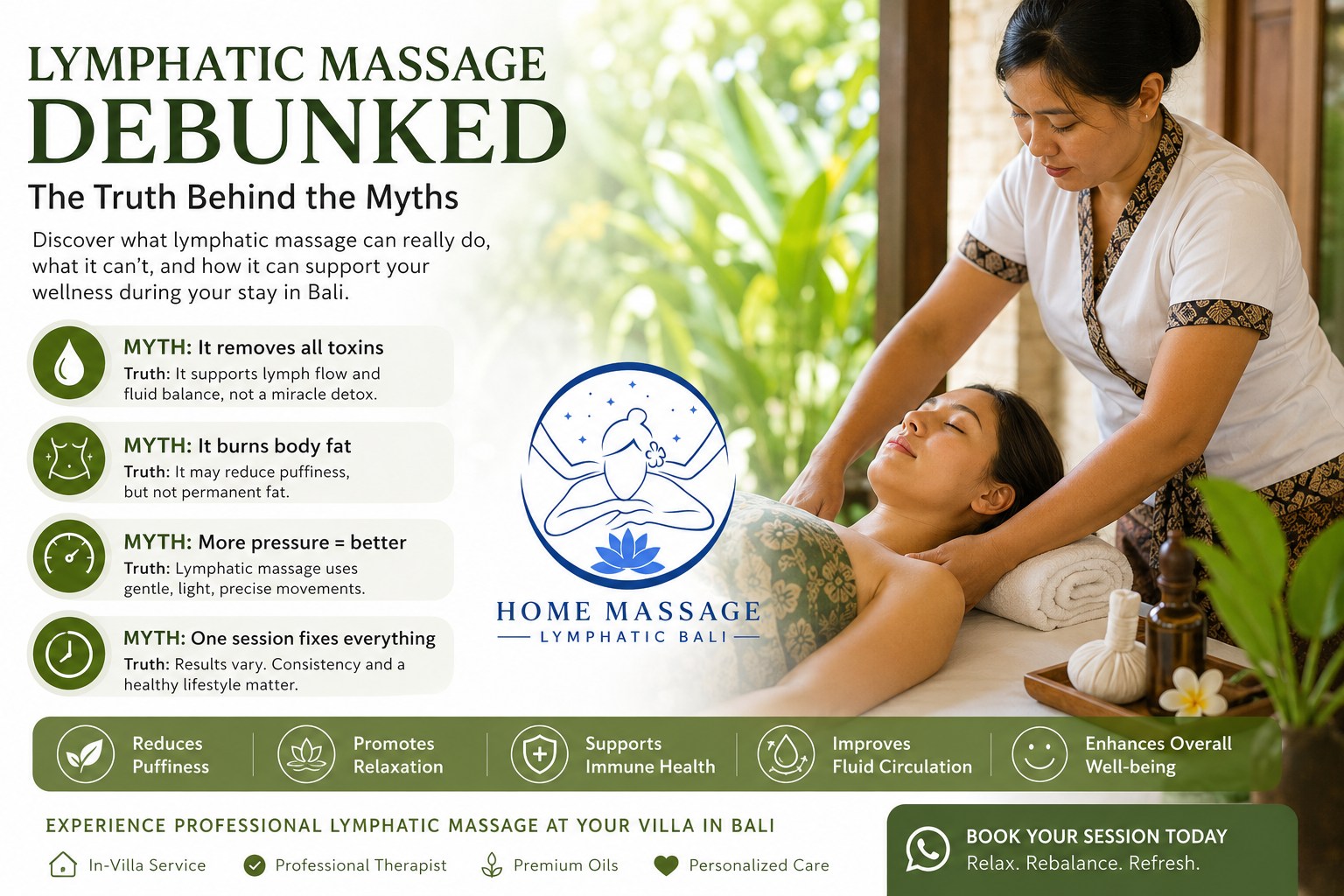
What You Really Need to Know in Bali
Lymphatic Massage Debunked is not simply about proving social media claims wrong. It is about helping you understand what lymphatic massage can realistically do, when it may be useful, and when another type of treatment is more appropriate. Many visitors in Bali arrive with the same concerns. They feel swollen after a long flight, notice facial puffiness after several days of travel, feel heavy after sitting for hours, or have heard that lymphatic massage can instantly remove toxins and body fat. The reality is more practical than the marketing often suggests.
How Professional Balinese Massage Can Complement Lymphatic Massage
Choosing professional Balinese massage or lymphatic focused bodywork in Bali should begin with understanding the difference between relaxation and a specific therapeutic technique. A traditional Balinese massage can involve broader pressure and work on muscles and soft tissues, while manual lymphatic drainage uses a much lighter, more deliberate touch. The right approach depends on what you actually want from the session.
If you are searching for Home Massage Bali, convenience is often an important part of the decision. After a flight, villa check in, beach day, wedding event, or long day exploring Bali, having a therapist come to your accommodation can make the experience considerably easier. However, convenience should never replace proper screening, communication, or realistic expectations.
This is where Lymphatic Massage Debunked becomes useful. Instead of promising dramatic results, a good practitioner should explain what the technique is designed to achieve and what it is not designed to achieve.
Why There Are So Many Myths About Lymphatic Massage
The popularity of lymphatic massage has grown rapidly through wellness content, beauty treatments, social media videos, and before and after photographs. The problem is that a legitimate technique can become surrounded by exaggerated claims.
A person may see a noticeably slimmer waist immediately after a session and assume that body fat has disappeared. Someone else may feel the need to urinate after treatment and interpret this as proof that large amounts of toxins have been removed.
These experiences can feel real while the explanation attached to them may be inaccurate.
That distinction is central to Lymphatic Massage Debunked. A responsible wellness provider should describe observable benefits without turning temporary changes into medical promises.
Manual lymphatic drainage is used clinically as part of treatment for conditions involving lymphatic fluid accumulation, particularly lymphedema. The NHS explains that manual lymphatic drainage is one component of decongestive lymphatic therapy, alongside compression, skin care, and exercise.
Lymphatic Massage Debunked Myth One: It Removes All Toxins From Your Body
One of the most common claims is that lymphatic massage flushes every toxin from your body.
This is an oversimplification.
Your lymphatic system has important functions, including fluid balance and immune activity. Manual lymphatic drainage can encourage the movement of lymphatic fluid, particularly when the system is not functioning effectively. However, describing a massage as a complete body detox is misleading.
Your body already has organs responsible for processing and eliminating waste. Claims that one massage session can cleanse the body of every harmful substance are not supported by good evidence.
This is an important part of Lymphatic Massage Debunked because the word detox is often used as a marketing shortcut.
A more accurate expectation is that gentle lymphatic work may help with fluid movement, temporary puffiness, relaxation, and comfort in appropriate circumstances.
That explanation is less dramatic than saying you are removing years of toxins, but it is considerably more trustworthy.
Lymphatic Massage Debunked Myth Two: Lymphatic Massage Burns Body Fat
This is another claim that deserves careful attention.
Lymphatic massage does not replace a calorie deficit, resistance training, cardiovascular activity, or a sustainable nutrition plan. It should not be marketed as a direct fat burning treatment.
If your body looks temporarily less puffy after a session, changes in fluid distribution can contribute to that appearance. This is very different from permanently eliminating stored body fat.
This distinction matters especially when clients book Home Massage Bali because they want to look different for a wedding, holiday photograph, beach day, or special event.
A session may help you feel less heavy or appear less swollen, but that should not be confused with permanent fat loss.
A trustworthy practitioner will explain the difference before treatment rather than promising a specific number of kilograms or centimetres.
Lymphatic Massage Debunked Myth Three: More Pressure Means Better Results
This is perhaps one of the most important myths to correct.
Many people associate effective massage with strong pressure. That can make sense with certain muscle focused techniques, but lymphatic drainage is different.
Lymphatic vessels are relatively superficial, so lymphatic drainage techniques generally use gentle, controlled movements. Cleveland Clinic specifically advises light pressure for self massage because excessive pressure can compress the superficial lymphatic structures rather than helping them.
Therefore, if you book a lymphatic session and expect deep pressure similar to a sports massage, you may initially wonder whether the treatment is working.
The gentle sensation is not necessarily a sign that the treatment is ineffective.
This is one of the clearest lessons from Lymphatic Massage Debunked. Effective does not always mean intense.
Lymphatic Massage Debunked Myth Four: You Should Feel Dramatically Different Immediately
Some clients expect a dramatic transformation as soon as the therapist finishes.
Real results are more individual.
Cleveland Clinic notes that people may not experience immediate improvement and that lymphatic drainage may not produce meaningful results for everyone, particularly people without lymphedema.
For someone dealing with temporary puffiness after travel, the perceived benefit may be relatively quick. For someone receiving treatment as part of a medical plan for lymphedema, progress can require repeated treatment and other components such as compression and exercise.
The important question is not whether you feel an extreme change after one session.
A better question is whether the treatment matches your actual goal.
Lymphatic Massage Debunked Myth Five: Lymphatic Massage Is Only for Medical Conditions
The opposite extreme can also create confusion.
Although manual lymphatic drainage has legitimate clinical applications, particularly for lymphedema management, lymphatic massage is also offered in wellness and cosmetic settings.
Some people seek facial lymphatic massage because they want to reduce temporary facial puffiness. Others simply enjoy the gentle, relaxing nature of the technique.
Cleveland Clinic describes lymphatic drainage as a technique that can be used for swelling associated with lymphedema and certain other situations, while facial lymphatic treatments may be used cosmetically for temporary puffiness.
The key is to avoid presenting a wellness treatment as a substitute for medical care.
Lymphatic Massage Debunked Myth Six: One Session Fixes Lymphedema
Lymphedema is not simply ordinary water retention.
It is a chronic condition involving impaired lymphatic function. Treatment may require a broader plan rather than massage alone.
The NHS states that decongestive lymphatic therapy can include manual lymphatic drainage, compression, exercise, and skin care. It also emphasizes that treatment is designed to control symptoms rather than provide a simple cure.
For someone with diagnosed lymphedema, professional medical guidance is important before arranging a standard spa treatment.
This is another reason Lymphatic Massage Debunked should focus on realistic expectations rather than dramatic promises.
If you have a diagnosed condition, tell the therapist before the session and follow the advice of your healthcare professional.
Lymphatic Massage Debunked Myth Seven: Anyone Can Receive It Without Screening
A gentle massage is not automatically appropriate for everyone.
Certain conditions can make lymphatic massage unsuitable or require medical clearance. Cleveland Clinic lists situations including blood clots, deep vein thrombosis, cellulitis, fever, infection, some heart conditions, kidney failure, stroke, and certain cancer related circumstances as reasons to avoid or carefully evaluate lymphatic drainage.
This does not mean lymphatic massage is dangerous for the average healthy client.
It means screening matters.
Before booking Home Massage Bali, you should be prepared to tell the therapist about relevant medical conditions, recent procedures, medications, swelling that has not been diagnosed, or other concerns.
A professional should be willing to postpone or modify treatment when necessary.
Lymphatic Massage Debunked Myth Eight: Lymphatic Massage Should Feel Painful
Pain is not the objective.
A properly performed lymphatic focused session is generally gentle. If you are expecting deep tissue pressure, the sensation may actually feel surprisingly light.
Some clients initially question whether enough pressure is being applied. That is an excellent opportunity for the therapist to explain the technique.
Instead of increasing pressure simply to satisfy the expectation that massage should hurt, the practitioner should maintain the appropriate technique.
For Home Massage Bali, communication becomes especially important because the session takes place in your private environment. You should feel comfortable telling the therapist if something feels uncomfortable, too cold, too warm, painful, or simply different from what you expected.
Lymphatic Massage Debunked Myth Nine: Feeling Thirsty or Tired Proves a Detox Happened
Some people report feeling relaxed, sleepy, thirsty, or temporarily tired after massage.
These sensations do not prove that a large quantity of toxins has been removed.
Cleveland Clinic notes that some people can experience temporary side effects such as fatigue, headache, or nausea after lymphatic drainage.
The practical approach is simple.
Listen to your body, rest if you need to, and maintain normal hydration. Do not use a particular sensation as a measurement of how many toxins supposedly left your body.
Lymphatic Massage Debunked Myth Ten: The More Frequently You Book, The Better
More sessions are not automatically better.
The ideal frequency depends on your objective.
Someone looking for occasional relaxation after travelling around Bali may choose a session when they feel they need it. Someone receiving care for lymphedema may have a structured plan determined with a qualified healthcare professional.
The NHS describes an intensive treatment phase for some lymphedema patients followed by maintenance strategies that can include self massage, compression, exercise, and skin care.
Therefore, the right question is not simply, “How many lymphatic massages should I book?”
The better question is, “What am I trying to address, and what treatment plan makes sense for that goal?”
What Lymphatic Massage Can Realistically Help With
Once the myths are removed, the potential benefits become easier to understand.
Temporary Puffiness and Fluid Retention
Some people seek lymphatic massage when they feel puffy after travelling, sitting for extended periods, or experiencing temporary fluid retention.
The technique is intended to encourage lymphatic fluid movement, which may help reduce swelling in appropriate situations.
Relaxation
The gentle nature of lymphatic massage can also make it a relaxing wellness experience.
For travellers in Bali, this can be particularly appealing after a busy itinerary. A treatment at your villa or accommodation means you can return to your normal environment immediately after the session rather than travelling across town.
Facial Puffiness
Facial lymphatic massage is often chosen for temporary puffiness.
The goal should be a refreshed appearance rather than a promise of permanent facial reshaping.
Cleveland Clinic notes that facial lymphatic drainage may reduce facial puffiness and can be used as a cosmetic treatment.
Support During Appropriate Medical Care
For people with lymphedema, manual lymphatic drainage can be part of a wider treatment strategy.
It should not automatically replace compression, exercise, skin care, or medical supervision when those are indicated.
A Practical Bali Scenario: The Post Flight Client
A common situation in Bali begins before the massage even starts.
A traveller arrives after a long international flight, spends several hours sitting, checks into a villa, and notices that their feet, ankles, face, or hands look puffier than usual.
They may search for Home Massage Bali because they do not want to travel again after reaching their accommodation.
In this situation, the practical approach is not to promise a detox or weight loss transformation.
First, the practitioner should ask about the swelling and general health. Then the therapist can determine whether a gentle wellness treatment is appropriate.
If the swelling is sudden, severe, painful, one sided, or associated with other concerning symptoms, massage should not be used as a substitute for medical assessment.
That is Lymphatic Massage Debunked in real life. The best treatment decision begins with the reason behind the symptom.
Another Practical Scenario: Preparing for a Bali Event
Another common situation involves a client attending a wedding, photoshoot, birthday celebration, or beach event.
The client may feel puffy after several days of travel, irregular sleep, restaurant meals, and long periods of sitting.
A gentle lymphatic session may be chosen as part of a broader relaxation routine.
However, the goal should be temporary comfort and a refreshed appearance rather than permanent fat reduction.
This distinction protects the client from unrealistic expectations while still allowing them to enjoy the wellness experience.
Practical Tips From a Massage Practitioner Perspective
Tell Your Therapist Why You Booked
Do not simply say that you want lymphatic massage.
Explain the reason.
Tell the therapist whether your main concern is facial puffiness, general relaxation, temporary swelling, post travel discomfort, or an existing medical condition.
The more specific the information, the easier it is to determine whether the treatment is appropriate.
Avoid Booking Based Only on Social Media Before and After Photos
Photos can be useful for inspiration, but they do not tell the entire story.
Lighting, posture, hydration, timing, clothing, camera angles, and temporary fluid changes can all influence appearance.
A professional service should explain what can realistically change.
Ask What Technique Will Be Used
The term lymphatic massage can describe different approaches in wellness settings.
Ask whether the therapist is using gentle manual lymphatic drainage techniques, a traditional massage technique, or a combination of methods.
This question helps ensure that the service you book matches what you expect.
Choose Convenience Without Sacrificing Professionalism
One major advantage of Home Massage Bali is that you can receive treatment at your villa or accommodation.
However, convenience should come with proper communication.
Before the appointment, ask about therapist experience, treatment duration, preparation, contraindications, and what you should expect afterward.
Do Not Ignore Persistent Swelling
If swelling keeps returning, becomes worse, affects one limb, or is accompanied by pain or other unusual symptoms, do not simply keep booking massage sessions.
Persistent swelling may require medical assessment.
Lymphedema can be a chronic condition and early evaluation can be important for proper management.
How to Choose a Lymphatic Massage Service in Bali
When comparing providers, look beyond attractive photographs and promotional promises.
A good service should make you feel comfortable asking questions before booking.
Look for clear information about the therapist, treatment approach, session duration, location coverage, preparation, and safety considerations.
If you are choosing Home Massage Bali, confirm whether the therapist comes directly to your villa, hotel, or other accommodation and whether the treatment is genuinely suited to your needs.
Most importantly, be cautious about services promising to cure disease, eliminate all toxins, or permanently remove large amounts of body fat through massage alone.
The most convincing wellness service is often the one that knows where its claims should stop.
Frequently Asked Questions About Lymphatic Massage
Is lymphatic massage actually effective?
It can be useful in appropriate situations, particularly for managing swelling associated with lymphedema as part of a broader treatment plan. Results vary according to the individual and the reason for treatment.
Does lymphatic massage help you lose weight?
Lymphatic massage should not be considered a weight loss treatment. Temporary changes in fluid and puffiness can affect appearance, but this is different from reducing body fat.
How often should I get lymphatic massage in Bali?
There is no universal schedule. Wellness clients may book occasional sessions according to their preferences, while people receiving treatment for lymphedema may follow a structured plan recommended by a healthcare professional.
Can I get lymphatic massage at my villa in Bali?
Yes, Home Massage Bali services can provide a convenient option for travellers who prefer treatment at their accommodation. Always check the therapist’s qualifications, treatment approach, availability, and suitability before booking.
Is lymphatic massage supposed to hurt?
Generally, lymphatic drainage uses gentle pressure rather than painful deep pressure. If you experience significant pain, tell your therapist immediately.
Can I do lymphatic massage myself?
Some people can learn simple self massage techniques, but it is important to understand the correct technique and whether it is appropriate for your situation. Cleveland Clinic recommends discussing self massage with a healthcare provider, particularly when lymphedema or other medical conditions are involved.
Who should avoid lymphatic massage?
People with certain conditions, including active infection, cellulitis, blood clots, deep vein thrombosis, some heart or kidney conditions, and certain cancer related situations may need to avoid lymphatic drainage or obtain medical guidance first.
Final Thoughts: Lymphatic Massage Debunked With Realistic Expectations
The most useful lesson from Lymphatic Massage Debunked is simple. Lymphatic massage can be a valuable wellness or therapeutic technique when used for the right person and the right purpose, but it is not a magical detox, instant fat loss treatment, or universal solution for every type of swelling.
The technique is particularly relevant when fluid movement and swelling are part of the concern. In medical situations such as lymphedema, it should be understood as one part of a wider management approach rather than a standalone cure.
For visitors in Bali, Home Massage Bali can make a wellness session much more convenient, especially after flights, long days of sightseeing, or busy travel schedules.
The best experience starts before the massage begins. Choose a provider who listens to your goals, explains the technique clearly, screens for relevant concerns, and avoids unrealistic promises.
If you are ready to experience a more personalized wellness treatment during your Bali stay, you can Discover More about available massage options and treatment experiences designed around your needs. When you are ready to arrange your session, Contact us Today and let us help you choose the most suitable option for your Bali stay.
Leave a Reply